

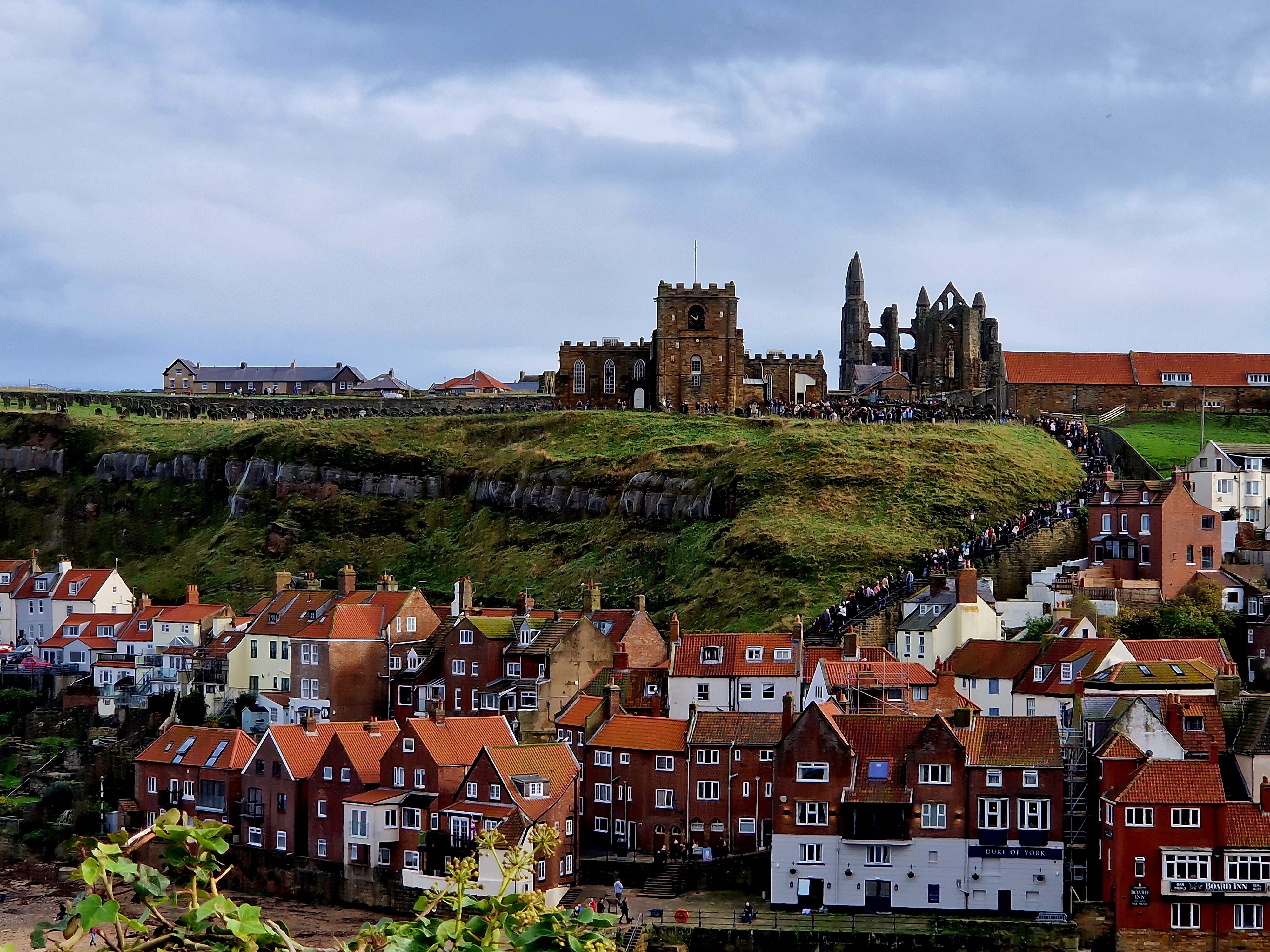
Lance Thackeray, Public domain, via Wikimedia Commons.
It can come as no surprise that as with everything linked to the seasons and to the passing of the year, that the leap year, which happens every 4 years, also comes with its own traditions and folklore.
Many of these traditions and folklore are associated with the extra day added to the end of February. This extra day was added to help keep our calendar aligned with the actual time it takes for the Earth to complete its journey around the sun. This day known in our calendar as February 29, has in many countries become associated with marriage proposals.

This tradition is said to have been started in fifth-century Ireland when St Brigid of Kildare seemingly annoyed that men were dragging their heels when it came to proposing, complained to St. Patrick. St. Patrick who probably had other things on his mind, like snakes, made a small concession to placate the irate St. Brigid. This concession was that women could on the extra day turn the tables on their menfolk and propose[1]. This day became known as ‘Bachelor’s Day’ or ‘Ladies Privilege’.
Some people claim that the tradition of February 29 and marriage proposals was spread to Scotland by Irish monks. The idea of Irish monks encouraging what might be seen by some as ‘promiscuity’ and ‘unnatural behaviour’ in women does seem a little strange. Nevertheless, the folklore around this tradition grew over time. It’s also said that incentives were put in place to ‘help’ a man make up his mind. These incentives usually took the form of a fine. The type of fine does vary according to which version of the tale you hear. The fine could be a kiss, the payment of a sum of money or a gift in the form of a silk dress or pair of gloves. The idea of men giving a gift of a piece of clothing to their rejected suitor can be found in traditions in other countries in Europe. For example, in Denmark it was said that the man had to give the woman 12 gloves while in Finland, the men just had to purchase enough cloth so the woman could make a skirt[2]. How much of an incentive the threat of a fine would have been is up for debate. The fine (if there really was a fine at all) would have had to be pretty high to convince a man to spend the rest of his life with a woman he never wanted to marry or maybe it was less of a financial penalty but more a way to protect a woman’s reputation and dignity. Heh, you might embarrass yourself asking a man to marry you but at least you got a present out of it.

Another rather strange tradition associated with the marriage proposal and Scotland is that apparently it was decreed by Margaret, the de facto ruler of Scotland in 1288 that any woman planning to propose had to wear a red petticoat under her skirt[3]. As the colour ‘red’ is often associated with passion, sexuality, and sexual desire, as well as love, this would make sense. Maybe Margaret thought the negative associations with the colour ‘red’ would put the women off proposing or that it would act as a warning signal for men. It does create a rather funny image of a Scottish man seeing a flash of red as a woman made her way towards him, and in Benny Hill fashion jumping out of a window and staying in hiding until the danger was over. The fly in the ointment with this story is that it is unlikely that Margaret, otherwise known as the ‘Maid of Norway’ passed the law herself (if the law ever really existed in the first place), as she would only have been 5 at the time[4].

Eventually, the tradition spread down over the border to England. In England, as the extra day had no legal status, the idea of a woman proposing to a man was accepted. However, it does make you wonder if this lack of legal status meant that the marriage proposal wasn’t seen as an official verbal contract. In England, during the early modern period, a man who broke off an engagement or jilted their betrothed could be sued for ‘breach of contract’[5]. Maybe the fact that this day wasn’t recognised in law meant that the man couldn’t be sued, so protecting him from the woman’s wrath if he had a change of heart.
It’s interesting that the leap day and Valentine’s Day fall in the same month. Maybe Valentine’s Day was used as a way of scoping out a potential husband’s frame of mind about them and marriage. This may have prevented the embarrassment of being rejected. Then again, maybe some of the women just wanted a new dress or pair of gloves!
However, a word of warning, if you do plan to propose, avoid doing it in Greece, as according to ancient Greek tradition anyone who marries in a leap year will very likely get divorced.
Added to the reversal of traditional gender roles, leap years also seem to have had unsettling effect on nature, especially when it comes to of all things – sheep and beans and peas.

In Scotland, it was believed that those born on the February 29, lived a life of untold suffering[6] and the year wasn’t very good for sheep either. There was a popular rhyme in Scotland, especially in Peeblesshire and Selkirkshire that although lacks details and well any information, sums it all up in a concise and straight-forward manner,
“Leap-Year
Was never a good sheep year.” [7]
In England, there existed an equally strange belief that beans and peas planted in a leap year would grow the wrong way up in their pods. This firmly held rural belief is confirmed in various sources. In The Folk-lore of Plants written in 1889, it states, ‘It is the ladies year and they always lay the wrong way in a leap year.‘[8] and in the Gardener’s Folklore: The Ancient Secrets for Gardening Magic this strange phenomenon is included among various myths, folklore, and oral traditions involving gardening[9]. However, a glimmer of scepticism may be seen in the writings of Squire Leveson-Gower or Titsey in 1888. The Squire having been informed by one of his labourers that there was something wrong with the pods, examined them for himself. He wrote, ‘I have opened several pods of this year’s growth and find the eyes is to the pod – and it probably will be so next year.‘[10]

Unfortunately, I haven’t been able to find a reason why an extra day in a leap year should affect sheep, peas, and beans in such a way, if anyone does know please tell me in the comments. Oh, and one last thing, it’s said that in a leap year, the weather always changes on a Friday, which in England is not that surprising.

Notes:
[1] In Irish tradition, a Leap Year means the ladies get to propose!, https://www.irishcentral.com/roots/leap-year-irish-tradition-proposal
[2] 8 leap year traditions and superstitions from around the world, 8 Leap Year Traditions And Superstitions From Around The World (countryliving.com)
[3] Ibid
[4] The Maid of Norway, https://www.newworldencyclopedia.org/entry/Maid_of_Norway
[5] Johanna Rickman, Love, Lust and License in Early Modern England
[6] Leap year traditions: from women proposing to Leap Day birthdays, the customs around the longer year, https://inews.co.uk/news/uk/leap-year-traditions-day-2020-womens-proposals-birthday-customs-longer-year-395017
[7] Robert Chambers, Popular Rhymes of Scotland
[8] Reverend Thomas Firminger Thiselton-Dyer, https://archive.org/details/folkloreplants00thisgoog
[9] Margaret Baker, Gardeners’ Folklore: The Ancient Secrets for Gardening Magic
[10] Notes and Queries, Notes and Queries – Google Books
Bibliography:
Baker, M. (1976). Gardeners’ Folklore: The Ancient Secrets for Gardening Magic, Cavalier House Books
Chambers, R. (2015). Popular Rhymes of Scotland, Fb&c Limited
Rickman, J. (2008). Love, Lust and License in Early Modern England, Ashgate
Roud, S. (2008). The English Year, Penguin Books


Leave a Reply