
On 15 August 1913, members of parliament gathered together and passed a law that changed the face of England. The Ancient Monuments Consolidation and Amendment Act 1913, as it is known, was an Act of Parliament that aimed to improve the protection afforded to ancient monuments in Britain. This law meant that landowners would be forced to maintain their historical buildings or face being fined or imprisoned[1] and this is the reason why to this day we are still able to enjoy these magnificent buildings.
One of the main protagonists who championed the introduction of this law was a former Viceroy of India, Earl Curzon of Kedleston, who had played a pivotal role in saving one of the most fascinating castles in England, Tattershall Castle in Lincolnshire.
The present-day Tattershall Castle was built by Ralph Cromwell, (no relation to Thomas or Oliver Cromwell), on the site of an earlier castle. Cromwell, like his namesakes, was a powerful man, who despite his relatively modest background rose to prominence under Henry VI, eventually becoming Lord Treasurer in 1433[2].

The castle that Cromwell built in the 1430s[3], is considered one of the earliest and finest examples of a brickwork building in England. The castle’s architecture was also the inspiration for the equally impressive, Eton College, which new research has discovered it predates by a few years[4]. The bricks used in the castle’s construction were transported by land and river from Yorkshire, Leicestershire and Lincolnshire. Records indicate that the principal brickmaker who oversaw the building works was a man by the name of Baldwin Docheman. Docheman was probably a continental specialist in this new building material from Germany or the Low Countries[5].
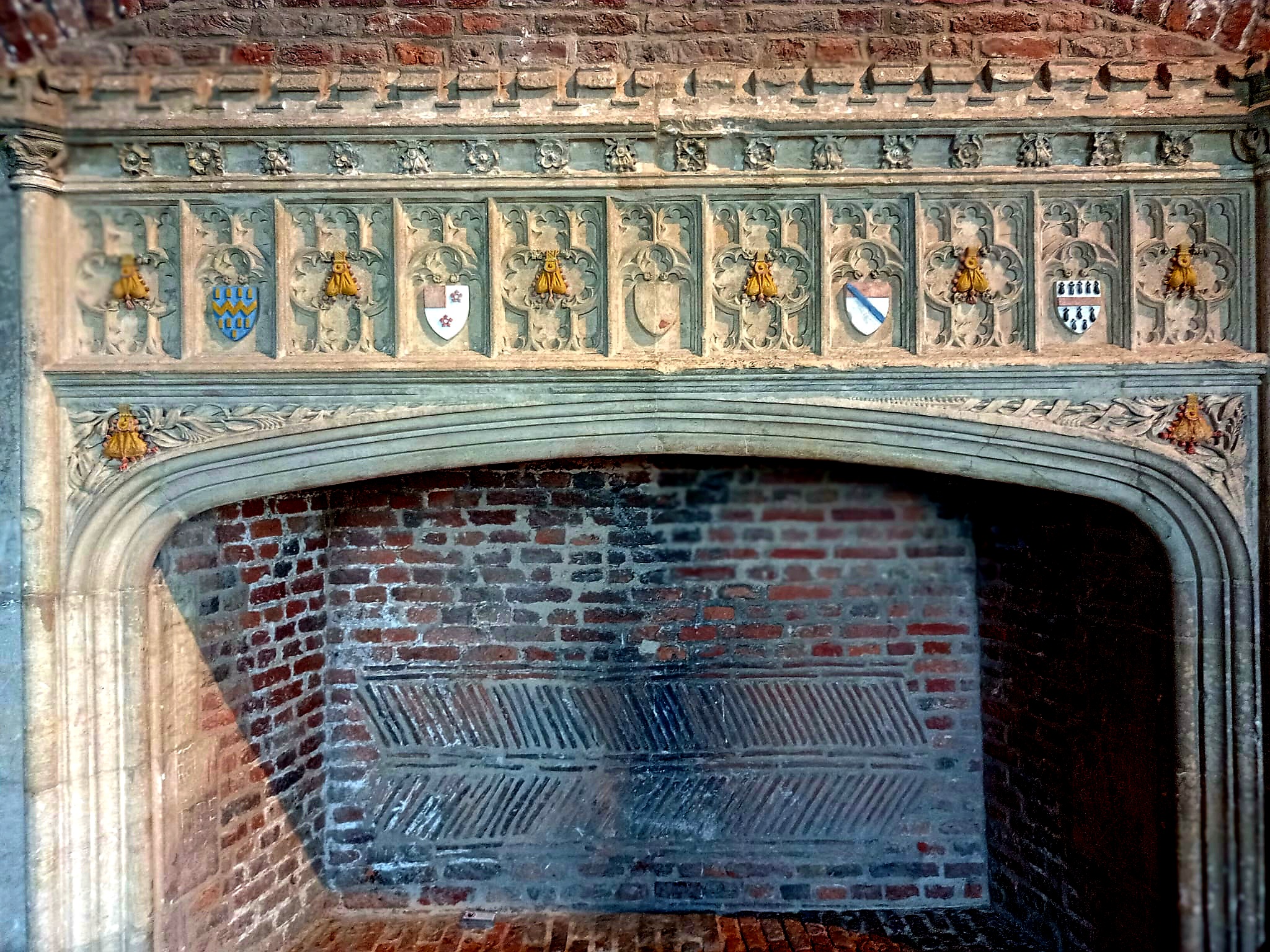
The castle also contains some impressive architectural features such as a beautiful vaulted ceiling and the ‘unique double-height parapet with a machicolated and arcaded gallery supporting a wall walk complete with heated rooms in the turrets’[6]. Rooms that are now believed to have been used as banqueting suites for guests to dine in while enjoying panoramic views of the Lincolnshire countryside. This innovative feature is the only surviving example of its kind found in Europe[7]. The castle also contained 4 fireplaces, whose removal and sale caused a national scandal and brought the castle’s plight to the public’s attention.

In 1911, Tattershall Castle looked very different to what it does today. The castle had been neglected for years and was in a terrible state. The consortium who had taken over responsibility for the castle, a few years earlier, decided that the cost of repairing the castle was too much and that they had no option but to sell it and the fireplaces to the highest bidder[8].

On hearing the news, a local minister, Rev. Canon Crawley was outraged. He approached the National Trust who agreed to help if the fireplaces were also saved. The fireplaces were seen as inherent to the value of the castle. Crawley attempted to raise the money needed through subscriptions. Unfortunately, less than £600 was raised, £500 of which came from a single donor, Sir Francis Tippel. Crawley blamed the lack of success on the apathy of the public[9]. Other prominent figures became involved in the fight including Thomas Fry, The Dean of Lincoln, and Col. Henry Knollys, the private secretary to Princess Maud of Wales[10]. Despite their valiant efforts, they ultimately failed, and the sale of the castle seemed inevitable. Crawley as a last resort even tried to appeal to the goodwill and sensitivity of the anonymous purchaser (whose name was never disclosed but who some believed to be the American newspaper magnate, William Hearst[11]) but to no avail.

However, the sale of the castle soon piqued the interest of the newspapers, and articles began to appear, in both local and national papers. The idea that an English castle of national importance had been sold to an American and was to be rebuilt there struck people with horror, ‘it is but cold comfort to reflect that in any part of the United States, it will look grotesquely out of place and that most of that most of the inhabitants of that great, but unpicturesque country will prefer the native sky-scraper’ and would look like a ‘Sèvres jar in a canning factory’[12].

The people involved in the sale were obviously concerned that the ripping out of the fireplaces would cause even more trouble, for they had the work done stealthily with the location of the fireplaces, prior to their being shipped to America, kept a closely guarded secret. Their fears were justified. One newspaper characterised the removal of the fireplaces as an action committed by vandals and then remarked that labelling it as such was an insult even to vandals[13].

Into this furor swooped Earl Curzon who getting wind of the situation somehow managed to halt the sale of the castle at the last minute, buying it outright. He then began the difficult process of trying to track down the fireplaces. Although the newspapers celebrated the purchase and the saving of Tattershall, they were less confident about whether the fireplaces could be recovered from the London dealer. The Weekly Dispatch (London) stated that this was because ‘considerable mystery surrounded the earlier stages of the reported sale of the castle’[14]. Despite this scepticism, the fireplaces were found and bought, although for more than they had been sold.

Curzon hired the architect William Weir to restore the castle and replace the fireplaces[15]. Once the work was finished, Curzon opened the castle up to the public. When Curzon died in 1925, the castle was given to the National Trust, under whose custodianship it has remained ever since.

Today, visitors are still welcomed at Tattershall Castle. The magnificent 6-floor red brick tower rising to over 33 metres dominates the surrounding Lincolnshire fens. It was built as a symbol of wealth and political rather than military power and even today as you walk up to it with its huge windows and parapet, it is easy to see why. Inside there are gorgeous Flemish 17th-century tapestries, exquisite ceilings and brickwork, and intriguing graffiti including a wide variety of witch marks and a poignant inscription from an English Civil War political prisoner. But it is the fireplaces that are in my opinion, still the main attraction. These fireplaces which bear various symbolic images including Ralph Cromwell’s coat of arms and a purse of coins, the symbol of his position as treasurer, also feature his curious motto, ‘Have I not the right’. This motto can be interpreted in many ways. It could suggest a man wanting approval from his peers, expressing his annoyance at how he was perceived, or insisting on recognition from those around him. Or it could be all three.
Little did Ralph Cromwell know that it would be his fireplaces, hundreds of years after his death, that would be the catalyst that saved England’s architectural treasures.

[1] From the Archive: How a scandal around fireplaces led to greater protections for ancient buildings, https://www.spab.org.uk/news/archive-how-scandal-around-fireplaces-led-greater-protections-ancient-buildings
[2] Sir Ralph de Cromwell (1393-1456), Treasurer of England, http://www.lambleyheritage.co.uk/Sir%20Ralph%20de%20Cromwell%20edit.pdf
[3] History rewritten: Archaeologist discovers Tattershall Castle is older than we thought, https://thelincolnite.co.uk/2022/07/history-rewritten-archaeologist-discovers-tattershall-castle-older-than-we-thought/
[4] History rewritten: Archaeologist discovers Tattershall Castle is older than we thought
[5] Tattershall Castle: Building a History, https://triskeleheritage.triskelepublishing.com/2020/01/16/tattershall-castle-building-a-history/
[6] Ibid
[7] Ibid
[8] Grantham Journal, 16 September 1911
[9] Manchester Courier, 23 September 1911
[10] Grantham Journal
[11] Fireplaces of Tattershall Castle, Tattershall Castle: Building a History, https://triskeleheritage.triskelepublishing.com/2020/01/16/tattershall-castle-building-a-history/
[12] Globe, 22 September 1911
[13] From the Archive: How a scandal around fireplaces led to greater protections for ancient buildings
[14] Weekly Dispatch (London), 24 May 1912
[15] From the Archive: How a scandal around fireplaces led to greater protections for ancient buildings
Bibliography
Globe, 22 September 1911
Goodall, John, (May 2022), The Castle: A History, Yale University Press
Grantham Journal, 16 September 1911
History rewritten: Archaeologist discovers Tattershall Castle is older than we thought, thelincolnite.co.uk/2022/07/history-rewritten-archaeologist-discovers-tattershall-castle-older-than-we-thought/
Fireplaces of Tattershall Castle, Tattershall Castle: Building a History, https://triskeleheritage.triskelepublishing.com/2020/01/16/tattershall-castle-building-a-history/
From the Archive: How a scandal around fireplaces led to greater protections for ancient buildings, https://www.spab.org.uk/news/archive-how-scandal-around-fireplaces-led-greater-protections-ancient-buildings
Manchester Courier, 23 September 1911
Sir Ralph de Cromwell (1393-1456), Treasurer of England, http://www.lambleyheritage.co.uk/Sir%20Ralph%20de%20Cromwell%20edit.pdf
Tattershall Castle: Building a History, https://triskeleheritage.triskelepublishing.com/2020/01/16/tattershall-castle-building-a-history/
Weekly Dispatch (London), 24 May 1912
Coat of Arms: By Lobsterthermidor (talk) 05:16, 7 August 2019 (UTC) – Own work, CC BY-SA 3.0, https://commons.wikimedia.org/w/index.php?curid=81091141



Leave a Reply