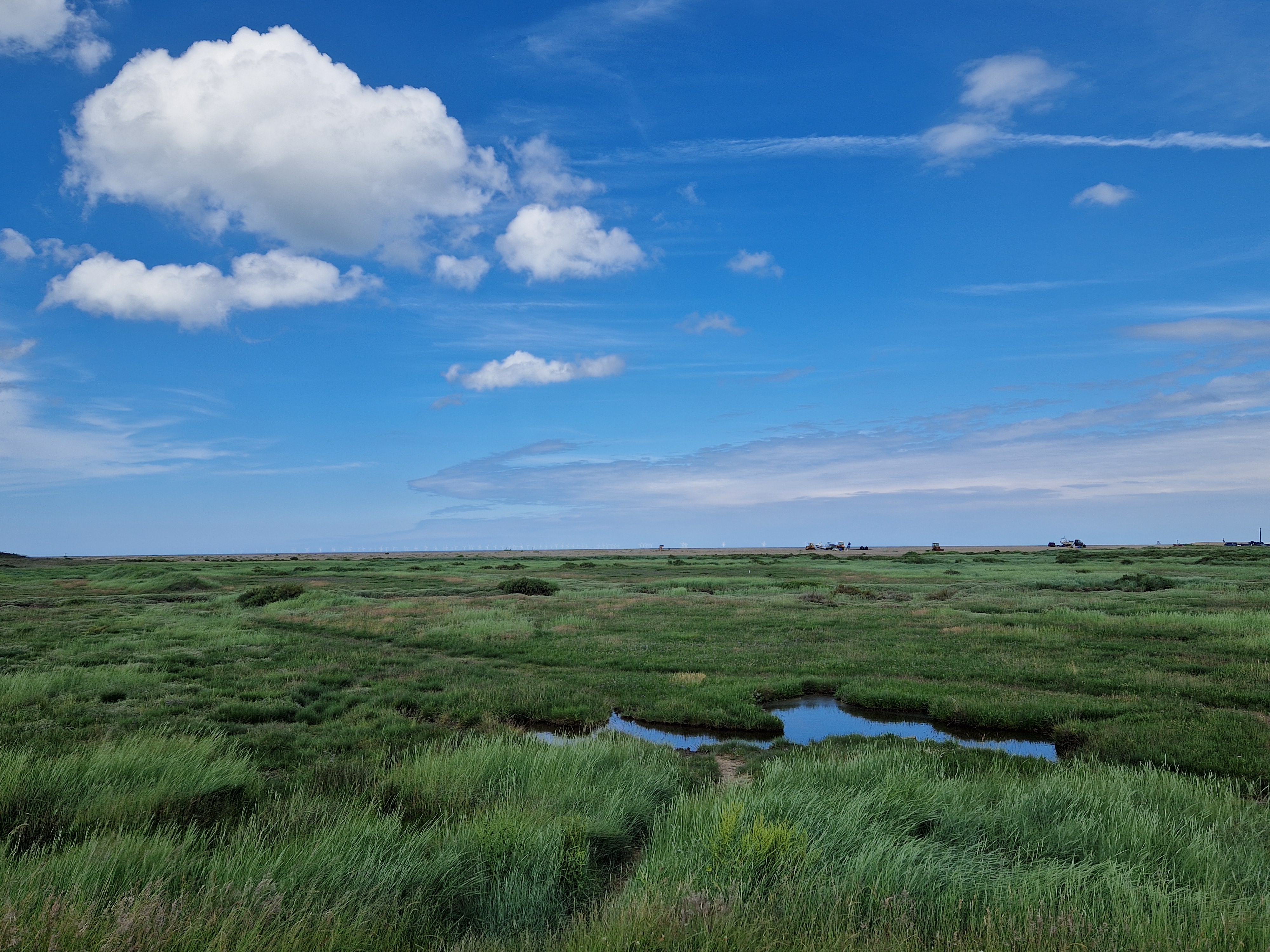

Stepping back into the fenlands of seventeenth-century, Eastern England, you would have found yourself in a very different place than today. Gone is the fertile agricultural land of Cambridgeshire, Lincolnshire, and Norfolk with its pleasant and gentle fields of barley, wheat, and rape seed, replaced with a marshland; unforgiving and full of hidden dangers. This remote and harsh land was inhabited by a group of people known for their wariness of strangers, dislike of outside interference, and strange customs and beliefs, who lived their lives on a tightrope, in a constant fight against starvation. These fiercely independent people were as wild as the land they loved; these are the Fen Tigers.

A Monastic Refuge
During the early medieval period, hermits seeking to escape from the world and bring themselves closer to God came to the fens. The remote fens offered peace, quiet, and solitude. Its reputation as a religious area steadily grew over the years and monasteries with massive estates, each with their own satellite communities, were founded on areas of higher ground known as fen hills or islands. These monasteries were referred to collectively as the Fen Five and were comprised of Ely Cathedral Priory, Thorney Abbey, Croyland Abbey, Ramsey Abbey, and Peterborough and Spalding Priory[1].

Image by Thorvaldsson. Creative Commons Attribution-Share Alike 4.0 International license.
Life in the Fens
Wildlife was plentiful in the fens, with many varieties of fish, such as perch, roach, burbots, pickerel, and lampreys as well as eels, water wolves, and the many marshland birds[2]. In fact, eels were so common that during the 1100s, they came to be used as currency. Records from that period show that in 1150, monks from Ramsay Abbey sent to Peterborough Priory quarry stone in exchange for 3000 eels[3].
During the warmer weather, wooden stilts and punts were used to travel across the marshy land and fen lakes (meres) whilst in winter, locals would make bone skates to cross the fens.
Food sourcing was dictated by the weather and the seasons. In the spring, harvesting of baby elvers was a common activity. In summer, it was fishing, fowling, and eeling (the eels would later be smoked). Excess catches along with the smoked eels would be sold at the local markets. Rabbit poaching was also engaged in to supplement the fenlanders’ meagre diet. In autumn, plovers were hunted.

Duck shooting occurred in the cold months when fish and eels were less plentiful. The fenlanders devised a unique method of hunting. This involved using specially adapted punt guns, which were so heavy that they could not be held but had to be propped up on punts, hence their name. In addition, reeds and sedge were harvested and sold to be used as thatch for buildings[4]. This was best done in winter when animals were not nesting and most of the leaf flag had been removed by frost. The right to cut the reeds was controlled and regulated by the local manorial courts[5].
Young Fen Tigers were taught to respect the dangerous fens, in order to prevent them from falling into sinkholes or being dragged into the deep streams. Knowledge of the fens, the animals, and traditional crafts such as the weaving of baskets and eel traps known as grigs[6] from the shoots of osiers (local willow trees)[7] was handed down through generations.
Living in the fens was not easy. The communities that managed to survive, did so by adapting their lives and skills to that of the fens, rather than changing the fens to suit their lives. The fens were a fenlander’s, “…home, the source of his subsistence and his defence in seasons of oppression or misfortune.[8]” It was also a constant battle against water which made, “his or her [fenlanders] attachment to the land, especially poignant. The Fen Tigers’ struggle against the waters reached far back in the distant past and defined their local culture.”[9]

A Forgotten People
Most outside accounts present a negative impression of both the people and the fens. The fens were seen as unhealthy; rife with gnats, malaria, and ague. In the seventeenth century, Samuel Pepys during a visit to the area, simply commented that it was “a heathen place”,[10] whilst Celia Fiennes, an early travel writer, wrote that it was “ye dirtiest place I ever saw.”[11]
It’s not surprising that over the years, these proud and independent people developed a natural suspicion and distrust of strangers, being well aware that “their body language and seeming taciturnity confirmed in the outsiders’ minds the cultural inferiority of the Fen Tigers”[12]. In part the strange speech displayed by the fen people was down to the harsh weather which forced them to speak with their mouths closed, producing a mutter which made them sound unintelligible. Their dress was as distinctive as their speech, comprising of a fustian jacket, moleskin trousers, and a moleskin cap. They were known to drink heavily, have close-knit ties within their communities, and prefer to work for piece rate rather than engage in regular employment and call someone else master[13].

Unfortunately, as with many insular and poor communities, we have little written evidence documenting their opinions and thoughts. This was still the case 200 years ago, since, “we are dealing with one of the most illiterate, subdued, silent, maligned and shadowy class in nineteenth-century society”.[14]
Draining the Fens and the Gentlemen Adventurers
Attempts to drain the fens had been made by the Romans, the Anglo-Saxons, Normans, and even Vikings, but it was only under the direction of the medieval monastic communities that real progress, albeit on a small scale, was made.
Drainage began in earnest in the 1630s. Various contracts were presented to King Charles I, including a proposal by Francis Russell, the 4th Earl of Bedford, who owned a significant amount of land in the area. Bedford with the support of a group of 12 wealthy backers known as the Gentlemen Adventurers, who he had promised a large return in terms of acreage for their investment, put forward a long-term plan which included straightening the rivers such as the old Bedford River, building embankments, erecting sluices (with channel gates to allow the tide to flow out) and creating stores (reservoirs) for the flood water[15]. Bedford’s scheme was accepted. For Bedford, this was a potentially financially successful move, for those who lived in the Fens and whose survival depended on the marshy land, it was a death knell.
Despite some recent accounts to the contrary, Bedford only employed the brilliant Dutch engineer, Cornelius Vermuyden in the late 1640s, for the second phase which centred on the draining of an area known as the Bedford Level[16]. This time the go-ahead was given by the de facto ruler, Oliver Cromwell. Vermuyden introduced Dutch land reclamation methods to England. He understood the nature of low-level marshy land and so constructed washes which allowed for occasional flooding[17]. This not only helped to preserve the nutrient-rich soil, but it also prevented a build-up of water pressure which could have had devastating consequences for the area. Over 40,000 acres were drained. Much of the work was done by Scottish prisoners of war [18]; men who had been captured after the defeat of the Scottish army at the Battle of Dunbar by the English New Model Army in 1650. Cromwell’s approval was a betrayal of the fenlanders. whose cause he had previously championed[19]. This about-face was perfectly consistent with Cromwell’s duplicitous and hypocritical nature.

Over the next 400 years, various projects to further drain the fens and to improve drainage methods were implemented in the area. Regardless of whether the draining of the fens was necessary or even inevitable, it had terrible consequences for the communities that relied on the fens; for food, work, and shelter. It also led to strangers coming in and settling in the area much to the displeasure of the fenlanders. At the heart of the matter, “much more than an ancient landscape was disrupted: so was a way of being.”[20]
The Rise of the Fen Tigers
“a thriftless race whose only strong passion was a love of freedom”[21]
Even before the 1600s, the fens had gained a reputation as a place where those rebelling against authority and the ruling powers of the time could find shelter. In the 1100s, Hereward the Wake made Ely and the surrounding area his base of operation from where he could carry out armed resistance against the invading Normans[22]. Many of these Anglo-Saxon fighters, stayed even after their rebellion failed, becoming fenlanders. Five hundred years later, this fighting spirit was seen again; this time in opposition to the draining of the east fens. Known as the Fen Tigers, they pursued an active and sometimes violent campaign of resistance; setting the reed beds on fire, attacking pastoral farmers and land owners, destroying the dams and dykes that were being constructed, and basically doing anything they could to put a halt to and disrupt the drainage work that was being attempted. Unfortunately, they could not stop it and watched, powerless, as their way of life was eroded in front of their eyes.

Although, the draining of the fens, created what is now the most fertile agricultural land in England, for the fenlanders it ushered in an age of extreme poverty and deprivation which lasted for centuries. Much of the wildlife they depended on for food was lost and although small pockets of fens still survived, it was not enough to supplement their diet. One of the tragic consequences was that infant mortality rates skyrocketed[23]. Many clung on to their traditions whilst others, when they realised that they were fighting a losing battle, adapted to their new reality, taking jobs to do with maintaining the dykes, drainage systems, and ditches.
Sporadic violent confrontations occurred over the next three hundred years, often when the fenlanders felt that themselves, their communities, and their way of life were under threat. One notable incident occurred in 1816, after the Napoleonic Wars. This time it was in response to the severe economic depression they were facing. Unemployment was high and so were food prices. Slogans such as ‘Bread or Blood’ were brandished. Riots broke out, with workers striking, setting fires, destroying machinery, and attacking farmers and the gentry. Authorities sent in Dragoons and the Hanoverian Infantry to put down the riots. Fen Tigers were executed as an example to others. The most well-known of these execution occurred on 28 June 1816 when five Littleport men were hanged. Eventually, the riots ceased and the Fen Tigers again accepted defeat[24].
Originally the term Fen Tigers applied to the fighters of the eastern fens. Where the name comes from is not clear. Maybe the fenlanders saw in the tiger characteristics that they themselves possessed. Both are solitary by nature, fierce when threatened, wild, and untameable, and both stalk through long ‘grass’ hunting for their prey.

The Return of the Fens
Aside from the destruction of a unique way of life, the drainage of the fens had another long-term consequence. Although the land is the most fertile in England, the water level has to be constantly monitored due to the risk of severe flooding. It is also the lowest-lying land in England and at threat of sinking even further.
Recent initiatives have successfully reclaimed some of the land, turning it back into marshland, and creating a habitat for the returning wildfowl and animals that used to be abundant.
As for the Fen Tigers, they themselves are now an extinct species. What drainage and land loss started, time and progress have finished. Over the years, the name Fen Tiger lost its original violent connotations and came to refer to anyone who was born and bred in the area, knew the traditional fenland skills, understood the land and the wildlife, and had knowledge of local plants and their medicinal properties. It was a title carried with pride, so much so that the image of a tiger can be seen proudly displayed on the fen flag. Peter Carter, eel catcher and willow fisherman was the last of his kind, but in 2016, he was forced to close his shop in Outwell[25]. Peter, whose ancestors for 500 years had earned their livings as eel-catchers[26], had kept his family’s traditional fen methods of fishing and fowling alive, often through difficult circumstances. He cited falling eel numbers and his lack of a successor to pass down his skills, sadly stating, “I feel I have let all the eel men of the past down – 3000 years of Fen life has at last gone”.[27]

Bibliography and Further Reading
Arnold, John H., Hilton, Matthew & Ruger, Jan (ed.), History after Hobsbawm: Writing the Past for the Twenty-First Century, Oxford University Press, 2018
Goulden, Glenda., Foul Deeds and Suspicious Deaths In & Around The Fens, Pen & Sword Books Ltd, 2008
Porter, End., Cambridgeshire Customs and Folklore, Routledge, 2020
Quetteville, Harry (ed.), Thinker, Failure, Soldier, Jailer: An Anthology of Great Lives in 365 Days, Aurum, 2012
Wheeler, William Henry., A History of the Fens of South Lincolnshire, Cambridge University Press, 2014
Notes:
[1] The Fens, https://en.wikipedia.org/wiki/The_Fens
[2] A brief history of the Great Fen, https://www.greatfen.org.uk/about-great-fen/heritage/brief-history-great-fen
[3] Ibid
[4] The Fens, https://en.wikipedia.org/wiki/The_Fens
[5] A brief history of the Great Fen
[6] Harry Quetteville (ed.), Thinker, Failure, Soldier, Jailer: An Anthology of Great Lives in 365 Days
[7] The lost skills of the eastern fenlands folk, https://morningstaronline.co.uk/a-f52c-The-lost-skills-of-the-eastern-fenlands-folk, Sep 2013
[8] William Henry Wheeler, A History of the Fens of South Lincolnshire
[9] History after Hobsbawm: Writing the Past for the Twenty-First
[10] Glenda Goulden, Foul Deeds and Suspicious Deaths In & Around The Fens
[11] Ibid
[12] History after Hobsbawm: Writing the Past for the Twenty-First Century
[13] Enid Porter, Cambridgeshire Customs and Folklore (RLE Folklore)
[14] History after Hobsbawm: Writing the Past for the Twenty-First Century 8
[15] Ely Museum, Who drained the fens, elymuseum.org.uk/wp-content/upload/2020/06/Drainage-who-drained-the-fens-1pdf
[16] The Fens, https://en.wikipedia.org/wiki/The_Fens
[17] Who drained the fens
[18] Ibid
[19] Ibid
[20] History after Hobsbawm: Writing the Past for the Twenty-First Century 8
[21] The Fen Tigers – the mysterious resistance group who fought to save part of Cambridgeshire, https://www.cambridge-news.co.uk/news/history/fen-tigers-mysterious-resistance-group-18645541
[22] Foul Deeds and Suspicious Deaths In & Around The Fens
[23] A brief history of the Great Fen, https://www.greatfen.org.uk/about-great-fen/heritage/brief-history-great-fen
[24] History after Hobsbawm: Writing the Past for the Twenty-First Century
[25] The lost skills of the eastern fenlands folk
[26] Entering the eel catcher’s workshop, http://news.bbc.co.uk/local/cambridgeshire/hi/people_and_places/nature/newsid_8789000/8789159.stm
[27] Eel fisherman quits amid plunging eel numbers, https://ideasareawesome.weebly.com/blog/eel-fisherman-quits-amid-plunging-eel-numbers 2016


Leave a Reply